Why Does a New Home Have Squeaky Floors? What Builders Can Catch Before Finishes Go In

Updated: 7 days ago

You move into a new home, walk across the bedroom, and hear a squeak under your feet. You take another step, then walk back over the same spot to make sure you heard it. Sure enough, it happens again.
It may be a small sound, but in a brand-new house it raises a fair question: Should my floor already be doing that?
Builders hear a different question: Where is the noise coming from, and how much finished work will we have to work around to find it?
A squeak does not automatically mean the floor is unsafe or that someone framed it incorrectly. It does mean something is moving or rubbing when weight is placed on that area. Understanding where that movement starts is the key to fixing the right problem.
The Problem: A Floor Can Look Fine and Still Make Noise
Most homeowners only see the finished surface: hardwood, carpet, tile, or another flooring material. Underneath it is a system of subfloor panels, joists or other structural supports, connections, and sometimes mechanical work running nearby.
When you step on a floor, it responds to your weight. If two components move against each other, you may hear a squeak, creak, or popping sound. A subfloor panel might move slightly against its support. A fastener may rub against wood. The sound could also come from a connection or from ductwork beneath the floor.
That is why a squeak is a symptom, not a diagnosis. The noise you hear from the living room does not tell you which component is responsible.
It also explains why the problem can be confusing for a homeowner. You may hear the sound in one small area while the actual point of movement is beneath it or close by. Walking across the room a few times can confirm that the noise is repeatable, but it usually takes a closer inspection to find its source.
Why New Homes Can Develop Floor Noise
A floor system has many parts that must work together. Small installation details can affect how those parts behave after people begin walking on them every day.
For example, a subfloor panel needs to sit properly on its supports and be fastened according to the approved plans and product instructions. A missed fastener, a gap at a connection, or a panel that can move underfoot may contribute to noise. Floor joist connections and other materials touching the framing can matter too.
Conditions can also change as a home moves through construction. Wood materials respond to moisture, and different trades continue working around the floor system after the framing crew has finished its initial installation. That means it is a mistake to blame every squeak on one person or one phase of the job without checking.
For homeowners, the useful takeaway is simple: a noisy spot deserves attention, but guessing at the cause may lead to a repair that does not last.
Why the Timing Matters to a GC
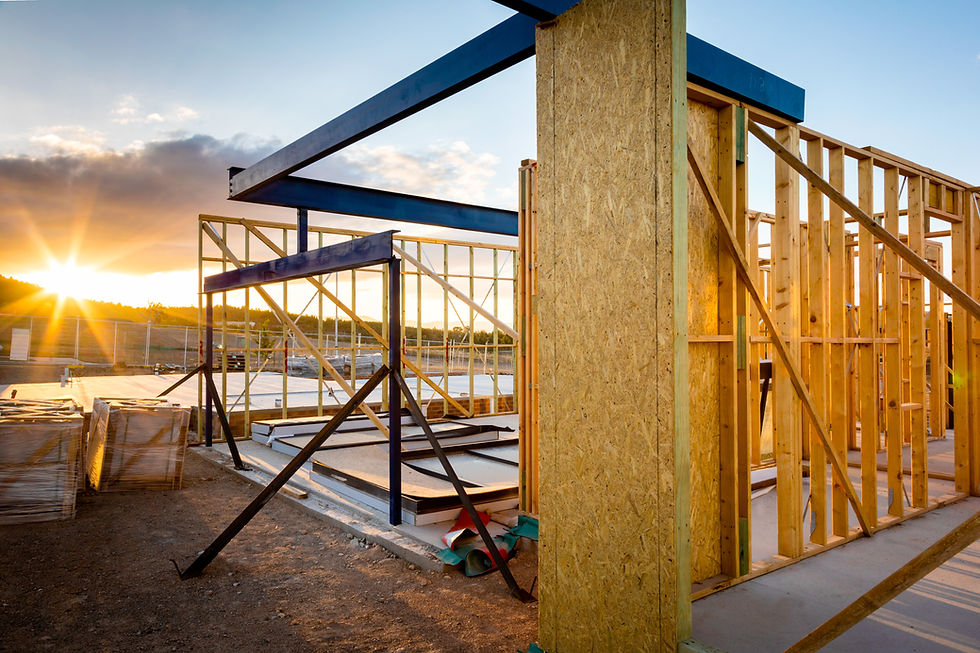
This is why the residential framing stage presents an important opportunity to inspect the floor system while its components remain accessible. The builder can mark the location, inspect the visible connections, and involve the appropriate trade before the next layers go in.
Now imagine finding the same squeak after the flooring has been installed and the ceiling below has been finished. The source may be harder to see and reach. Even a relatively small correction can become more disruptive because finished surfaces are in the way.
This is why the framing stage presents such an important opportunity. It is one of the last chances to inspect and walk the floor system while many of its parts remain accessible. Catching a noise at this point does not guarantee a home will never develop a squeak, but it gives the project team a better chance to investigate and address an existing one before finishes conceal it.
The Solution: Walk, Listen, Locate, Then Correct
One of the most useful checks is also one of the simplest: walk the subfloor before finished flooring is installed.
Do not just glance across the room to see whether the panels look level. Walk the areas people will actually use. Listen near doorways, along common paths, and around any spot where the floor feels or sounds different. If a squeak appears, mark the location so it can be checked rather than forgotten once the next trade arrives.
From there, the goal is to find the movement. Depending on the location and what is accessible, the builder and appropriate trades can check whether:
- The subfloor is seated and fastened as specified.
- A fastener missed its intended support or a connection has movement.
- A joist, hanger, or other floor component needs closer review.
- Ductwork or another installed material is rubbing against the framing.
- Moisture or a visibly changed panel condition needs evaluation.
Review Dino’s residential framing projects for examples of structural floor, wall, and roof systems before finishes conceal them.
The correction depends on what the inspection finds. Adding a fastener without locating the source, for example, may leave the actual cause untouched. Structural components and engineered floor products should be handled according to the approved design and manufacturer’s instructions.
What Should a Homeowner Do If the House Is Already Finished?
Start by making the problem easy to identify. Note which room it is in, approximately where the sound occurs, and whether it happens every time you step there. If the sound appears only under certain conditions, note that too. A short video showing the location and sound may help explain the concern to your builder.
Then ask the builder to investigate. Avoid assuming that the visible flooring is the cause—or that the framing beneath it must be. Several parts of the finished floor assembly can produce noise, and the right repair depends on finding the point of movement.
A clear description of the problem gives the builder a better starting place than simply saying, “The upstairs floor squeaks.”
Better Floors Begin Before You Can See Them
For a homeowner, a squeak in a new house is something you notice every time you walk across the room. For a GC, it can become a difficult callback if the source is discovered after the space is finished.
The answer is careful installation, a chance to walk and check the floor while it is accessible, and communication when something sounds or feels wrong. Those steps cannot promise a perfectly silent floor for the life of a home. They can help the project team catch avoidable problems at the stage when they are easiest to investigate.
At Dino Framing Carolina, we know the parts of a home that eventually disappear behind finishes still shape how that home feels to the people living in it. Paying attention to those details during structural framing helps builders deliver a better experience long after the crew has left the jobsite.
If you need a labor-only framing subcontractor who understands inspection readiness and trade coordination, send us your project details.